Chambers call in Brussels for less bureaucracy and policies to improve business competitiveness
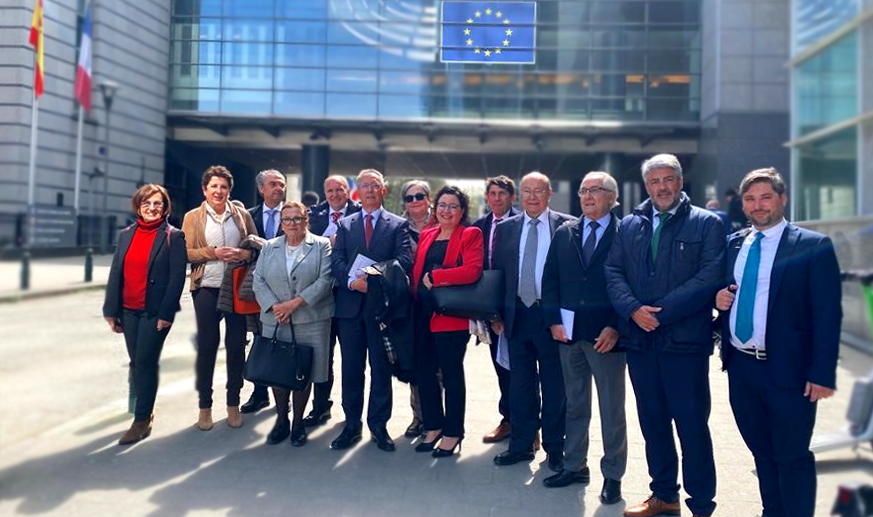
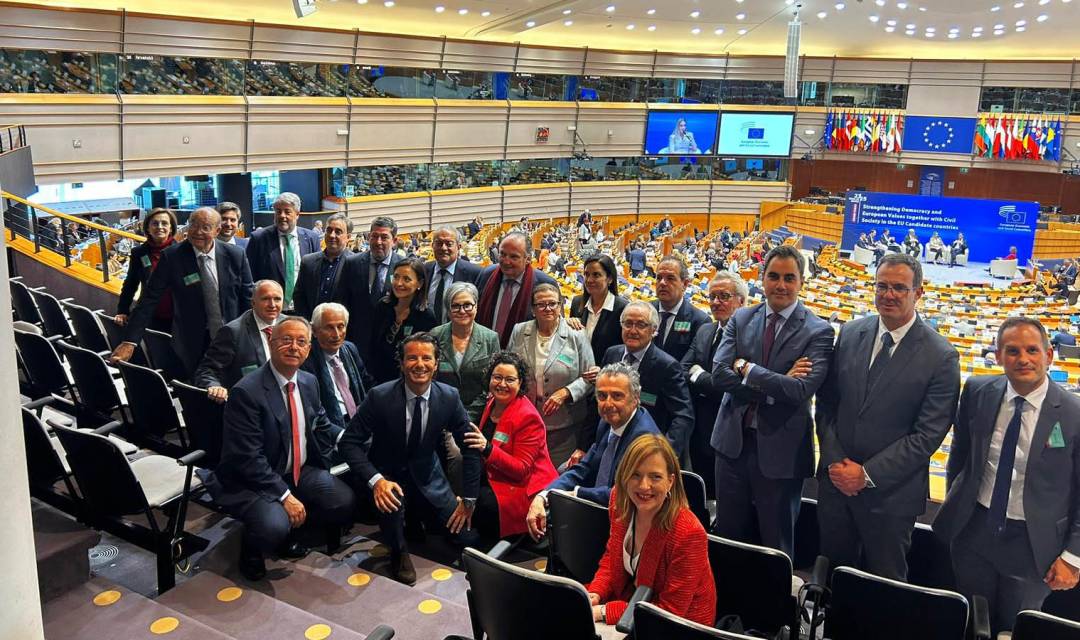
The Council of Chambers of the Valencian Community, made up of the presidents of the Chambers of Alcoy, Pablo de Gracia; Alicante, Carlos Baño; Castellón, María Dolores Guillamón; Valencia, José Vicente Morata; and Orihuela, Mario Martínez, together with representatives of their executive committees such as the CEO of EMAC Group, Emi Boix, began today an institutional visit to Brussels with the aim of establishing a dialogue to share economic and commercial priorities that will enable sustained growth of the single market. The institutional visit began today with a working session at the office of the Comunitat Valenciana–Regio Europea Foundation.
During the meeting, proposals and priorities of the Chambers of Commerce were analyzed in view of Spain’s presidency of the Council of the European Union. The Chambers called for measures to provide companies with an appropriate environment for productive activity, as well as the need for EU policies aimed at strengthening the competitiveness of Spanish companies.
Specifically, initiatives were proposed such as boosting the single market for services, improving job training, promoting tax harmonization and innovation, and reducing energy costs by lowering energy dependency, as well as analyzing the impact of each European regulation on SMEs. The delegation then met with the Chief Economist of the Directorate-General for Internal Market, Industry, Entrepreneurship and SMEs, Román Arjona, who reviewed the main aspects of the Net-Zero Industry Act and the Critical Raw Materials Act and their impact in the context of the industry’s “permacrisis.”
At this point, Chamber representatives agreed on the need to correct excessive bureaucracy and legislation so that companies can compete under better conditions with third countries. They also highlighted issues such as the reindustrialization of the region to reduce dependence on other markets and avoid situations such as the semiconductor supply crisis, which particularly affected the automotive industry.
The agenda continued with a working lunch with José Manuel Rodríguez Castro, Economic and Commercial Counsellor at the Permanent Representation of Spain, who explained the priorities of trade policy during Spain’s presidency of the Council of the EU in the second half of 2023.