Structural Joints
what are structural joints?
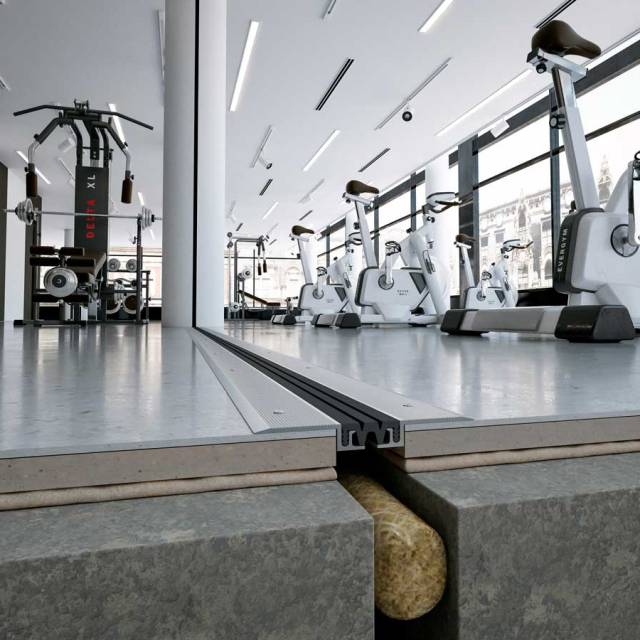
EMAC® structural joints are solutions specifically designed to respect and cover the building’s structural joints, allowing independent movement between different construction elements without compromising the flooring or cladding. Their main function is to absorb structural displacements, preventing the transmission of stresses that could cause damage. Below are some of their features and benefits:
- Materials: Made of resistant profiles such as aluminum, combined with flexible central bodies (such as EPDM), capable of absorbing large movements.
- Adaptability: Designed to match exactly with the structural joints of the substrate, ensuring system continuity without interfering with its function.
- Movement Capacity: Allow multidirectional movement absorption caused by settlement, thermal expansion, or structural loads.
- Floor Protection: Prevent cracks, fissures, or detachment by avoiding stress transmission to the covering.
- Safety: Provide robust and durable solutions suitable for high-traffic or technically demanding areas.
- Aesthetic Finish: Integrate the joint into the flooring design, ensuring a clean and professional finish.
- Versatility: Suitable for both indoor and outdoor flooring, as well as different types of coverings and conditions of use.
- Regulatory Compliance: Allow compliance with existing structural joints, a fundamental requirement in any construction project.
types of structural joints
EMAC® offers a range of solutions for structural joints, designed to absorb the natural movements of buildings and ensure integrity, safety, durability, and the preservation of the aesthetic finish. Below are the main types of solutions:
- Metal Joints: The entire joint is made of aluminum. They are high-resistance joints capable of covering large widths.
- Hybrid Joints: The sides of the joint are made of aluminum and the flexible core is made of rubber. They offer medium resistance and can cover medium widths.
- Control Joints: These joints help control cracking in floorings by allowing movement to occur at predetermined locations.
- Floor Joints: Joints specifically designed for floors due to their dimensions and robustness.
- Wall/Ceiling Joints: Lighter joints suitable for floors, walls, and ceilings.
- Perimeter Joints: Joints specifically designed for perpendicular junctions such as floor-to-wall connections.
- Flush-Mounted Joints: Joints designed to be level with the flooring and installed below it, fixed to the slab.
- Surface-Mounted Joints: Joints designed to be installed on top of the flooring or covering.
- Joints for Large Movements: Designed for joints requiring greater movement capacity, such as in shopping centers, airports, or large-scale buildings.
EMAC® offers solutions for structural joints designed to absorb structural movements, ensuring the durability, safety of the building, and preserving its aesthetic finish.